Buffalo Model Auditory Training (BMAT)
Buffalo Model Auditory Training targets the root causes of auditory processing difficulties in children and adults, building stronger listening, memory, and learning skills.

.jpeg)
You've probably noticed it before. Your child hears you perfectly in a quiet room, but the moment there's background noise, such as a classroom full of kids, a busy restaurant, they're lost. Some children also struggle with spelling and reading in ways that don't match their intelligence. In many cases, their ears work fine. The challenge is in how their brain processes what they hear.
That's where Buffalo Model Auditory Training comes in. At ListenHEAR, BMAT is our primary approach to helping children and adults strengthen how their brains process sound. It's structured, personalized, and targets the exact areas where auditory processing breaks down. It builds the foundation of auditory processing and listening.
Who Can Benefit from BMAT?
We work with patients from age 3.5 through 60. Whether you're a parent watching your child struggle to follow directions at home or an adult who can't keep up with conversations in meetings, BMAT can help. The key is identifying which specific skills need work, and that's what our evaluation does.
The Four Skills BMAT Develops
After your APD evaluation, we'll know exactly which areas need attention. BMAT breaks auditory processing into four categories, and your therapy plan focuses on the ones affecting you or your child most.
Decoding
Decoding is all about speed and accuracy. It's how quickly and accurately your brain interprets individual speech sounds, what we call phonemes. If you confuse similar-sounding words like "cat" and "cap," or you lose track when someone talks fast, decoding might be the issue. This often shows up as reading and spelling problems.
Tolerance-Fading Memory
Tolerance-Fading Memory addresses two related challenges at once: understanding speech when there's background noise and remembering what you've just heard. This is the complaint we hear most often. Many children struggle when multiple sounds compete for their attention. While adults may find it difficult to follow conversations in busy environments or group discussions. This often affects reading comprehension and the ability to follow multiple-step directions. If that sounds familiar, TFM weaknesses may likely be part of the picture.
Integration
Integration is about the efficient transfer of information between the two sides of the brain. People with an integration deficit may experience difficulty synthesizing information, coordinating multiple sensory inputs, and comprehending and expressing pragmatic language. Additionally, individuals may struggle to understand the emotional content, humor, or sarcasm conveyed in speech.
Organization
Organization refers to the ability to keep sounds or words in the correct sequence. When a person hears a group of sounds or words in a sentence, do they keep them in the correct order, or do they sometimes switch the order when repeating or spelling them? This may look like a difficulty with spelling or following directions in order, and it strongly impacts learning.
How BMAT Therapy Works
Your therapy plan is built around your evaluation results. We don't use a one-size-fits-all approach—every session targets your specific areas of deficit and the specific phonemes you or your child struggles with most.
At ListenHEAR, patients receiving Buffalo Model Auditory Training (BMAT) are typically seen once per week for one-hour therapy sessions. A group of 12-14 sessions is considered a full round of therapy. At the end of the round, a re-evaluation is completed to assess progress, identify areas of improvement, and determine the most appropriate next steps for continued therapy or support. Some patients make such strong progress that they no longer meet the criteria for an auditory processing disorder, and their families are happy with the progress, allowing the therapy to be concluded. For others, therapy may continue with a new plan that targets specific skills that still need strengthening.
Patients can be seen for therapy in person at our Bonita Springs, Florida office, or via telehealth if you're in Florida, Virginia, Alaska, Arizona, Colorado, Georgia, Texas, Ohio, Massachusetts, or Pennsylvania. Between sessions, patients are provided home practice exercises and an app for short, targeted activities that reinforce what we're working on in therapy. We continually track progress and adjust the plan as needed.
How to Get Started with BMAT Therapy at ListenHEAR
Buffalo Model Auditory Training starts with an Auditory Processing Evaluation. We see children as young as 3.5 and adults up to age 60, both in person and remotely, for testing and therapy.
Contact our Florida office at (239) 444-7393 or our other remote locations at (888) 243-2720 to schedule an appointment. We'll help you identify what may be making listening more difficult and provide strategies and support to make understanding easier.
Other Treatments
.jpeg)
ARIA Therapy
ARIA therapy retrains the brain's auditory pathways when one ear becomes dominant, strengthening the non-dominant ear in just four sessions.
Buffalo Model Auditory Training (BMAT)
BMAT therapy helps children and adults strengthen auditory processing through personalized, structured brain-based listening training.
Pediatrics
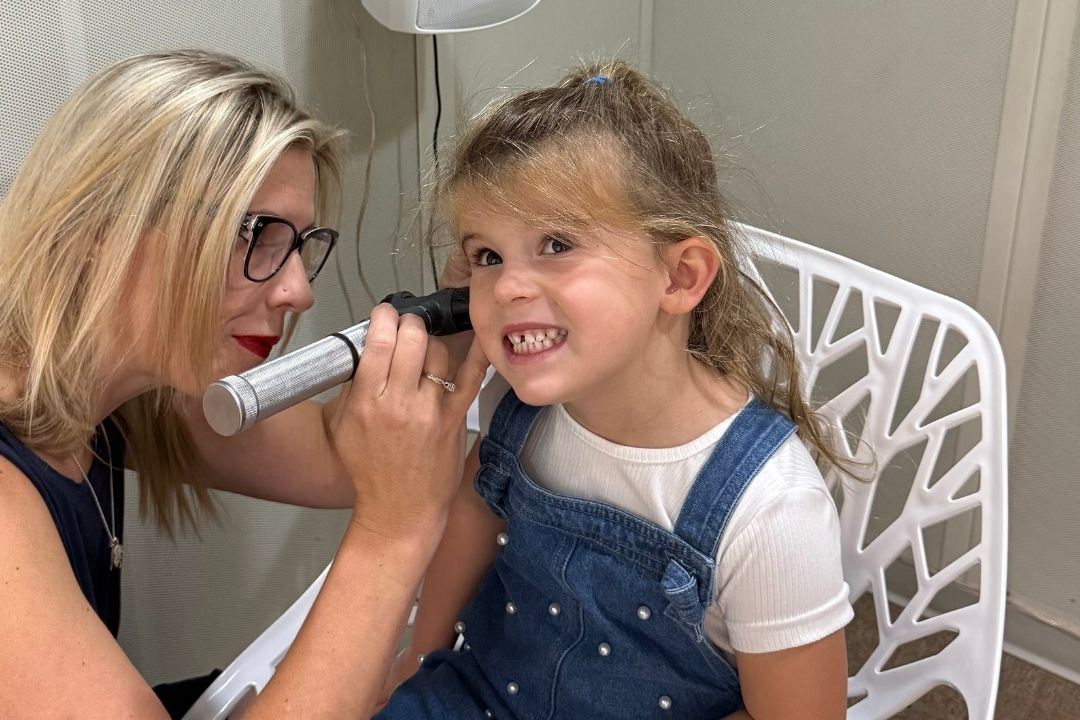
Pediatric audiology services for children of all ages, including hearing evaluations, APD assessments, and early intervention support.