ARIA Therapy
ARIA therapy uses dichotic listening exercises to retrain the brain when one ear suppresses the other, treating amblyaudia and related conditions that cause difficulty understanding speech in noisy environments.

.jpeg)
You'd think normal hearing test results would mean everything's fine. But what if you or your child can hear sounds perfectly but still struggle to follow conversations? Especially when there's a competing person talking at the same time as what you are supposed to listen to. What if reading programs and speech therapy aren't helping, despite everyone's best efforts?
The problem might not be hearing at all. It could be amblyaudia, a condition in which one ear becomes dominant and essentially shuts out or down input from the other ear. Think of it as having a "lazy ear" that's stopped pulling its weight.
ARIA therapy, developed by Dr. Deborah Moncrieff at the University of Memphis, is designed specifically to fix this imbalance. At ListenHEAR, we've seen it make a real difference for both kids and adults who've been stuck despite trying everything else.
What's Happening with Amblyaudia
Here's what happens: during early childhood, your brain is organizing how it'll process sound. In some kids, one side of the brain begins to suppress auditory information from the opposite side. The result? One ear dominates, and the other becomes weak.
We think genetics plays a role, but early ear infections or persistent fluid in the middle ear during those crucial first two years can worsen things. When sound quality is disrupted during this critical window, the dominant ear takes over. The weaker pathway never learns to process speech signals properly, which creates unwanted distortion.
You can't spot amblyaudia on a regular hearing test. The only way to identify it is through dichotic testing, in which different words or numbers are presented to each ear at the same time. Many kids go years without a diagnosis, struggling with phonics, reading, and spelling—not because they're not trying, but because they're listening through an unbalanced system.
Challenges with Amblyaudia
Kids with amblyaudia often hit a wall with reading programs, phonemic awareness activities, or speech therapy. They work hard but don't make the expected progress. That's why we recommend treating amblyaudia first, before investing time and energy in other interventions. Once the auditory foundation is solid, everything else becomes more effective.
Adults with amblyaudia typically describe being bothered by soft background sounds that others easily ignore. They also struggle to understand speech in noisy environments, even though their hearing tests come back normal. The encouraging news? Your auditory system still has neuroplasticity, even as an adult. A “lazy” ear can usually be retrained pretty quickly.
How ARIA Works
ARIA uses dichotic listening exercises—presenting different sounds to each ear simultaneously to retrain your brain's auditory pathways. The goal is simple: strengthen the non-dominant pathway so both ears contribute equally to processing sound.
Most people need just four one-hour sessions. That's remarkably efficient, especially considering how much impact it can have on a child's ability to benefit from school and therapy.
ARIA can treat three specific conditions:
- Amblyaudia — when one ear suppresses the other, creating an imbalance
- Dichotic Dysaudia — difficulty processing competing sounds presented to both ears at once
- Amblyaudia Plus — a combination requiring targeted intervention
We offer ARIA sessions in person at our Bonita Springs, Florida office. If you can not come to Florida for ARIA therapy, there is a remote program we can do one-on-one through Zoom for 9-12 weeks, which works on dichotic integration activities. We provide remote dichotic integration appointments for patients in Florida, Virginia, Alaska, Arizona, Colorado, Georgia, Massachusetts, North Carolina, Ohio, Pennsylvania, and Texas.
Schedule Your Evaluation at ListenHEAR
If you've been frustrated by slow progress in reading, phonics, or speech therapy, it's worth investigating whether an auditory asymmetry is part of the picture. The same is true if everyday sounds seem unusually overwhelming, or if following conversations in busy restaurants feels exhausting even though you have “normal hearing.”
Identifying amblyaudia starts with dichotic testing as part of a comprehensive auditory processing evaluation. We see children as young as 3.5 and adults through age 60.
Contact our Florida office at (239) 444-7393 or our general office number at (888) 243-2720 to schedule an evaluation. We'll help you figure out what's making listening harder and what can actually be done about it.
Other Treatments
ARIA Therapy
ARIA therapy retrains the brain's auditory pathways when one ear becomes dominant, strengthening the non-dominant ear in just four sessions.
.jpeg)
Buffalo Model Auditory Training (BMAT)
BMAT therapy helps children and adults strengthen auditory processing through personalized, structured brain-based listening training.
Pediatrics
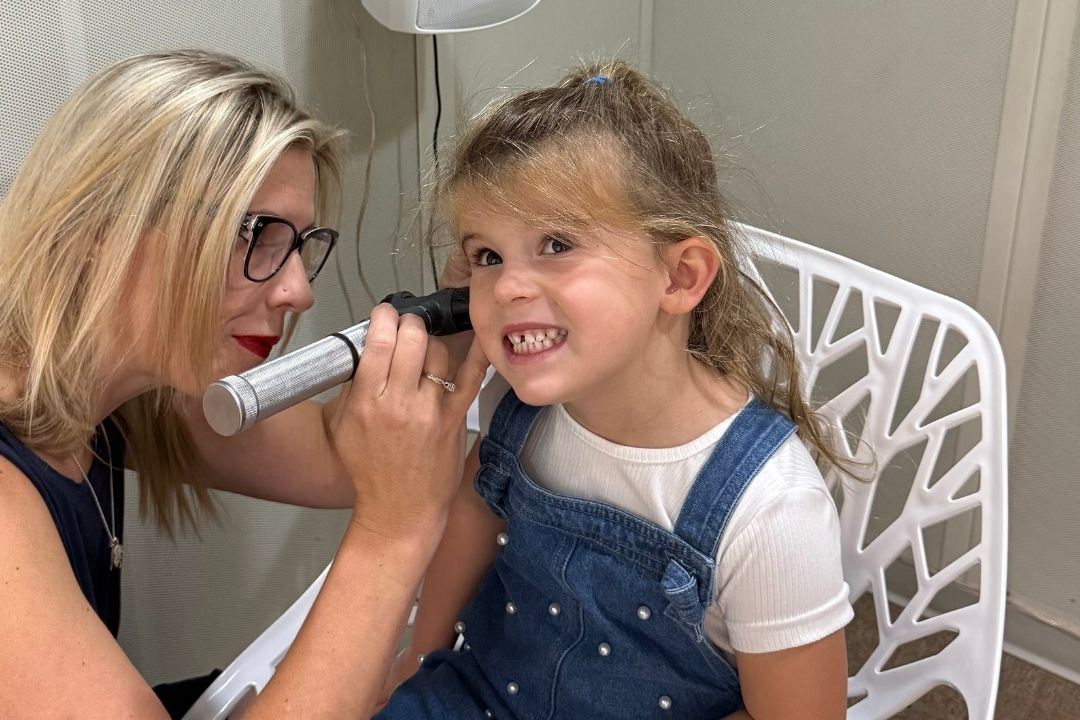
Pediatric audiology services for children of all ages, including hearing evaluations, APD assessments, and early intervention support.